Τρίτη 5 Ιανουαρίου 2016

Saudi Arabia Faces the Arab Spring

Turkey says that she cannot support Saudi Arabia on the issue of the death of the Shiite cleric (see following Reuters article). Therefore I will assume that Turkey cannot support Saudi Arabia in her confrontation with Iran either. Does that mean that there is an agreement between Turkey and Iran to push for a sectarian war within Saudi Arabia?

Note that in December 2015 Saudi Arabia announced an anti-terror coalition which will include many Arab and non-Arab Muslim countries. See BBC article below. The truth is that this coalition will target Iran first of all, and ISIS too, where the Turkish-Saudi interests diverge. When I say ISIS I mean the Sunni Islamist militants who are supported by Turkey. You can call them ISIS or anything else that you like.
Map 1


Turkey and Qatar have been invited by Saudi Arabia, first because the primary target of this coalition is Iran, and second because Saudi Arabia had to invite Turkey too, otherwise it would be like publicly connecting Turkey to ISIS. Turkey could not exclude her participation either, because it would be like admitting her support to ISIS. And also Turkey wants to work with the Saudis against the Iranians in some places.

The coalition is mainly promoted with petrodollars from Saudi Arabia and United Arab Emirates, and it is a threat to Iran, but it is also a threat for Turkey’s ambition to lead the Sunni world. Besides targeting Iran, the coalition promoted by the Saudis will also attack the Sunni Islamists supported by Turkey, when the Turkish-Saudi interests diverge. It is not a coincidence that after the Saudis announced their anti-terror coalition ISIS declared war against Sauid Arabia. See the article of International Business Times below.

Turkey and Iran might be killing each other in Syria and Iraq, but they can always cooperate against the Saudi King in Saudi Arabia. The Turks can use their connections to help the Sunni Saudis revolt, and the Iranians can do the same with the Shiite Saudis. Note that Shiites constitute 10-20% of the Saudi population. This would happen while the Saudis have to make dramatic cuts to social spending due to low oil prices, which is going to discomfort the Saudi citizens who are not used to this kind of cuts. See the CNBC article below. That makes Saudi Arabia more vulnerable to an Iranian-Turkish cooperation within Saudi Arabia.

If that’s indeed the case it is easy to understand why some analysts talk about the worst period for Saudi Arabia since the crisis in the Saudi-American relations after the 9/11 attacks at the Twin Towers. Note that 15 out of the 19 terrorists that took part in the 9/11 attacks were Saudis. See the Independent article below. The 9/11 attacks in 2001 forced the Americans to move their military bases from Saudi Arabia to Qatar in 2002, and it definitely played a role in the decision to attack Sadam Hussein and Iraq in 2003. The attack in Iraq in 2003 was a total disaster for Saudi Arabia and a blessing for Iran.

I am not saying that the United States attacked Sadam Hussein in 2003 in order to revenge Saudi Arabia. I am saying that if the Saudis hadn’t turned to China, and if the Saudis hadn’t carried out all this attacks against the Americans, in order to force them to remove their military bases, the Americans would have thought twice about it. Of course for the United States to remove Sadam Husein was a blessing, because it strengthened their ally the Kurds, who were suppressed by Sadam, and who are also very rich in oil and natural gas. And also because Sadam Hussein was an international terrorist who funded every socialist terrorist organization on the planet. Moreover by toppling Sadam Hussein, the Shiite majority of Iraq that was suppressed by Sadam came to power and became an American ally.

But even though the Americans had all this benefit from overturning Sadam Hussein, they would have though twice before doing it, if their relations with the Saudis had not been so damaged. The proof is that the Americans did not overturn Sadam Hussein in 1991, after the first Gulf War, when Sadam Hussein invaded Kuwait. The Americans defeated Sadam Hussein, they reached Baghdad, but they did not overturn him. The reason was that if Sadam was overturned, the Shiite majority would rise to power, and the doors of Iraq would be widely opened to Iran. Sadam Hussein was a Sunni Arab socialist, who did not have good relations with the Sunni Arab Islamists of the Persian Gulf, but he had even worse relations with the Shiite Persian Islamists of Iran. Sadam Hussein fought one of the bloodiest wars of the Middle East against Iran in the 80’s (1980-1988).

Therefore if the Saudis face a Turkish-Iranian coalition domestically, at a time of reduced social spending, without having the US support, then there is the chance that the Saudis will face the Arab Spring. Note that the Saudis were among the aggressors in some of the Arab Spring wars i.e. Syria, Iraq, Libya, and among the defenders in some others i.e. Egypt, Bahrain, Yemen. I am not saying that the Saudis will face the Arab Spring domestically, and I am not in a position to predict if this will happen. But since 2011, when the Arab Spring broke out, many analysts are talking about whether the Saudis will eventually face the Arab Spring. I guess that this question is more intense now.

Map 2


Articles

“Turkey says cannot support Saudi execution of Shiite cleric”, January 2016

“ISIS Vows War Against Saudi Arabia: Islamic State Group Threatens Arab Monarchy After Announcement Of Anti-Terror Coalition”, December 2015

“Saudis announce Islamic anti-terrorism coalition”, December 2015

“Saudis unveil radical austerity program”, December 2015

“Saudi Arabia insists it had nothing to do with 9/11 attacks”, July 2015


Σάββατο 2 Ιανουαρίου 2016

Alexander the Great and the New Silk Roads

The following map shows the ancient Silk Roads, which were trade routes that connected East Asia to Europe. With blue you can see the sea routes and with red the land routes.

Map 1 : The Silk Roads


A large part of the wars in history were due to the effort of controlling the Silk Roads, in order to secure the trade routes, to cut out parties that were charging commissions and taxes, and to block competing trading routes. The Greek King Alexander the Great conquered Persia (Iran) and Egypt, and he had the Silk Roads under his control, as you can see at the following map.

Map 2 Empire of Alexander the Great 323 B.C.


I must say that the Silk Roads did not include any 100% sea route until the Suez Canal was opened by the British in 1869, and the Red Sea was finally connected to the Mediterranean Sea. Until then the sea routes of the Silk Roads would reach Egypt through the Red Sea, then they would become land routes, and in the Mediterranean Sea they would become sea routes again.

There was of course Vasco Da Gama and the Portuguese, who discovered the sea route around Africa in 1497-1499. The Portuguese wanted to avoid the Mediterranean Sea and the taxes charged by the Ottomans, and when they beat the Ottomans at the sea fight of Diu (India) in 1509, they managed to keep a small portion of the trade around Africa. But Da Gama’s new trade route was not a replacement for the traditional Silk Roads, which are the most efficient connection between Europe and Asia. Inhospitable and costlier Siberia could not be a substitute for the Silk Roads either.

Map 3 The New Trade Route Opened by Vasco Da Gama in 1499


See also Vasco Da Gama and the Silk Roads

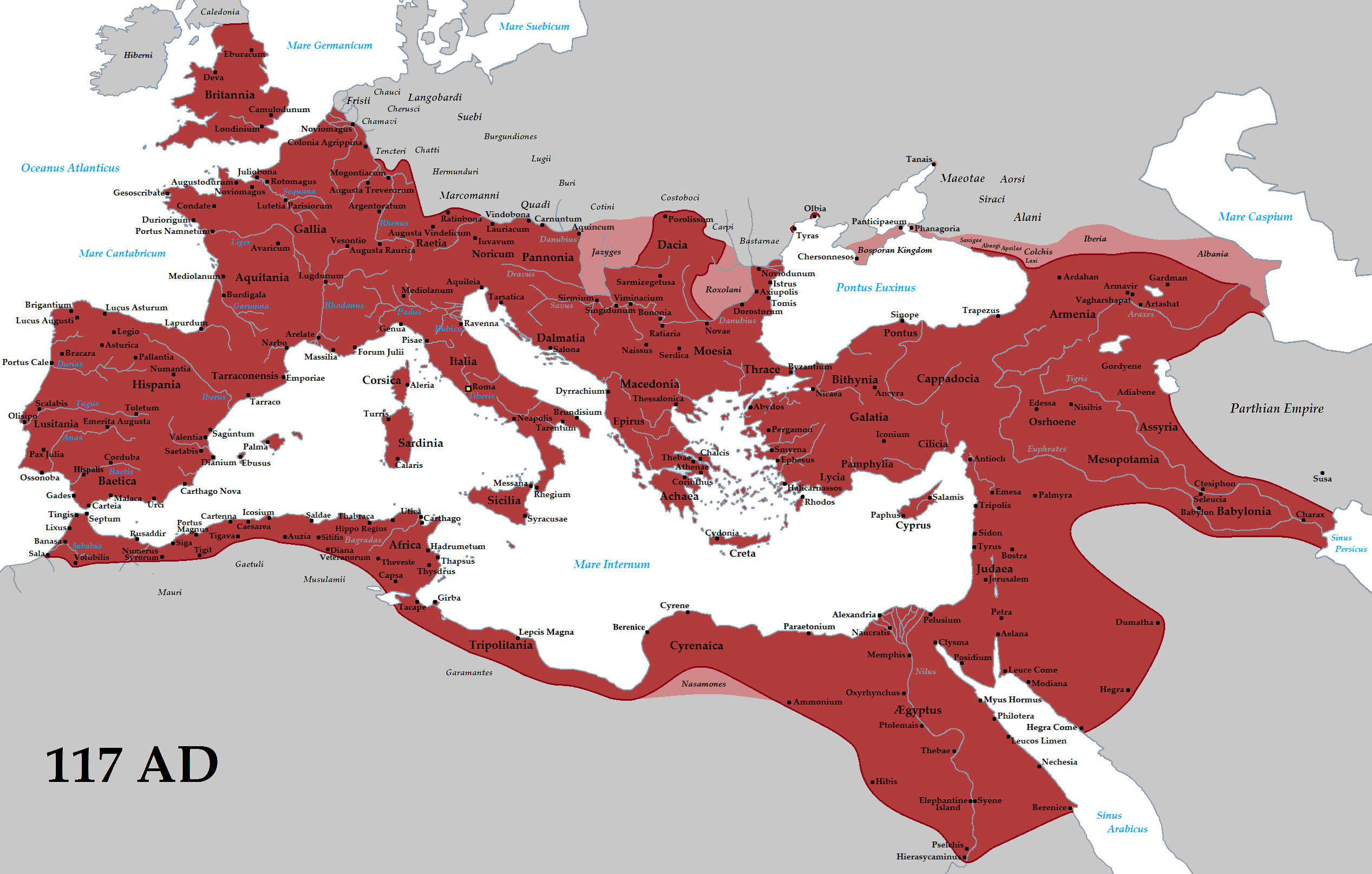
You can see on the map how important Egypt, Turkey and East Mediterranean Sea (Israel+Lebanon+Syria) were for the Silk Roads. That’s the reason the Greek King Alexander the Great was among those who conquered these lands. Many other did it to, with the Romans, the Byzantines and the Ottomans among them.

Map 4 Roman Empire 117 A.D.


Map 5 Byzantine Empire 555 A.D.


Map 6 Ottoman Empire 1683A.D. – 1699A.D.


What is very important that is that things are still the same, with the main trading products being oil and natural gas, instead of silk and spice. There is still a war for the Silk Roads, with the Persians (Iranians) trying to reach the Mediterranean Sea (Iran-Syria pipeline), and the Turks and the Arabs trying to stop them (Qatar-Turkey pipeline). In the meantime the Turks and the Arabs are fighting each other for influence too. Actually there are Arabs that are today supporting the Persians i.e. the Alawites of Syira and the Shiites of Iraq.

Map 7 The War for the New Silk Roads in Syria and Iraq


Map 8 The Sunni VS the Shiite Pipelines


Moreover China is trying to use the New Silk Roads in order to import raw materials from the rest of the world, and to export her manufactured goods to the rest of the world. The New Silk Roads promoted by China include ports, railways, highways, natural gas and oil pipelines etc. China has worked things out with Iran, Pakistan, Kazakhstan, Turkmenistan, who are very happy to be part of the New Silk Roads promoted by China. But then there are the Turks and the Russians, who not only want a share of the profit, but they also want a share of the political influence over the New Silk Roads, as for example is the case with Central Asia (Turkmenistan, Kazakhstan, Uzbekistan etc).  See “Turkey, Russia and China in Central Asia”.

and “The War for the Railways and the Motorways of the New Silk Roads”.

and
 “China’s Silk Road project gets port in Turkey”, September 2015

“China all aboard Turkish high-speed rail effort”, June 2015

There is also India, which is China’s economic rival, and wants to have influence in the New Silk Roads too.

You can see that it is geography and not history repeating itself. History is limited by geography and therefore history always follows geography. The phrase “history is repeating itself” is not accurate. By saying “geography is repeating itself”, “geography does not change”, “the revenge of geography”, or something like that, one can be a great deal more accurate. Things are a lot more simple when the focus is put on geography. When the emphasis is on geography one simply needs to find which were the main powers of the time, what they were trading, and through which routes they were trading it.

I must also say that the Turkey’s neo-Ottoman policy, as envisioned by Erdogan and Davutoglu today, aims in putting under Turkish control the new Silk Roads. The map of the Caliphate that ISIS gave to the media puts the the New Silk Roads under Turkish control. By doing so, ISIS will also operate as a cartel of oil and natural gas. See “ISIS: The Oil and Natural Gas Cartel”.

Map 8 : ISIS Map


Τρίτη 29 Δεκεμβρίου 2015

ISIS : An Oil and Natural Gas Cartel

As soon as the Turks and the Israelis started talking about a possible détente, in order for the Turks to buy the Israeli natural gas, since the Israelis need to sell somewhere after the Zohr field was discovered in Egypt, the Grand Mufti of Jerusalem said that ISIS is part of Israel’s army. The Grand Mufti also called all Muslims to fight ISIS which is an run by the Jews.

That means that if the Turks and the Israelis reach a detent, the Saudis will start saying that the Jews are behind ISIS. Now that Israel is working with the Saudis against the Turks and the Iranians, the Turks and the Iranians say that the Saudi King is a puppet of the Jews. That’s important in order to understand how significant the war against Israel is for the propaganda of the Turkish Islamists, in their effort to become the leaders of the Sunni world.

I must say once more that the Turkish Islamists do not imagine a Chaliphate under total Turkish control. They imagine it in the form of NATO i.e. the Sunni Islamists of Egypt will run Egypt, the Sunni Islamists of Syria will run Syria etc, but all of them will accept Turkey, the greatest military power of the Muslim world, as their leader.

That’s what we mean when we say that Erdogan wants to become the Sultan of the Chaliphate. Obviously the Saudis do not accept the Turks as the leader of the Sunni Islamist world, because they believe they are the leaders. And Saudi Arabia might not be the strongest Muslim country, since the Americans were not selling the Saudis the kind of weapons they were selling to the Turks, because they could use them against Israel, but Saudi Arabia is the richest Sunni country.

The Islamic Chaliphate, as envisaged by ISIS and the Islamists of Turkey, will be an oil and natural gas cartel, which will negotiate better prices with the Americans, the Europeans and the Chinese, and will fight the Russians and the Iranians if it has to. That’s more or less the dream of ISIS, i.e. an oil and natural gas cartel with a very strong army. The good news is that this is something very difficult to accomplish. Gamal Nasser tried to achieve the socialist version of this dream in the 60s and failed. And he tried it only for the Arab countries.

On the other hand, if a Chaliphate is created with Turkey on one hand, and the Sunni parts of Syria and Iraq on the other, it wouldn’t be too bad for Turkey. Turkey would gain access to the Persian Gulf, 100 years after her defeat during World War 1. Maybe that’s the second best for the Turkish Islamists. That’s even better given that Qatar accepts Erdogan as the Sultan of the Chaliphate.

The following map shows with green what was left of the Ottoman Empire (Turkey), before it was chopped by the British and the Arabs during WW1.

Map 1

  
“Saudi Grand Mufti calls ISIS “part of the Israeli army”, Δεκεμβρίου 2015
http://www.brookings.edu/blogs/markaz/posts/2015/12/28-saudi-mutfi-isis-israel-riedel

Παρασκευή 25 Δεκεμβρίου 2015

United States VS Great Britain

An interesting article from National Review. See “Breaking from the US the UK condemns the Muslim Brotherhood Calling it a Terrorist Organization”, December 2015. The article says that England has decided to declare the Muslim Brotherhood a terrorist organization, while the United States are not willing to do so. The Muslim Brotherhood is the Sunni Islamist organization mainly supported by Turkey and Qatar, which are Sunni countries, but also supported by Iran, which is a Shiite country, due to the Muslim Brotherhood’s confrontation with Saudi Arabia, which is Iran’s greatest rival.
                      
Saudi Arabia and the United Arab Emirates have declared the Muslim Brotherhood a terrorist organization, even though Saudi Arabia supported the organization in the past, in order to attack the socialists of the Egyptian leader Gamal Nasser, who at the time was attacking Saudi Arabia. But now Turkey and Iran use the Brotherhood to attack Saudi Arabia, and things are very different.

According to the article the ideology of Muslim Brotherhood is the mother of all Sunni Islamist terrorist organizations i.e. ISIS, Al Qaeda etc. See the 6th paragraph of the article. I think that the right way to put it is that for the terrorists of Sunni Islamist organizations, the ideology of the Muslim Brotherhood is what Karl Marx is for the terrorists of the socialist organizations. There are two kinds of terrorists organizations, the socialist and the islamist ones.

 According to National Review, now that the English have diverging geopolitical interests from the United States, they can follow somewhat different foreign policies, and by declaring the Muslim Brotherhood a terrorist organization the English will be moving closer to Saudi Arabia and distancing a bit themselves from Qatar. Note that the English recently made a multi-billion dollar agreement with the Chinese, which includes the joint construction of a nuclear plant in England, worth 18 billion GBP (25 billion euros).

Obviously the United States were not very happy to see one of their closest allies cooperating with China in the energy sector. See “China's Xi seals nuclear power deal as part of $62 billion splurge in Britain”, October 2015. Moreover the English are working with the Russians in the natural gas sector, and that will only increase if the Nord Stream 2 pipeline goes ahead, because Shell, the Anglo-Dustch giant, holds 10% of the shares.

The deals with the Chinese and the Russians will greatly enhance England’s energy security, and will reduce her dependence on Qatar’s liquefied natural gas (LNG). England’s production from the North Sea is falling, and Norway and the Netherlands cannot supply England with the required amounts. The English had to turn to expensive Qatari LNG, in order to enhance their energy security, but expensive energy does not help an economy’s competitiveness.

The English were also worried that a war in the Middle East could interrupt the Qatari supplies to England, and were not very happy to be dependent on Qatar. See Financial Times “UK warned over dependence on Qatar gas”, January 2012. To make things better for the English, the Qataris were investing billions of dollars in England. See for example the Guardian Guardian “How much of London is owned by Qatar’s royal family”.

Map 1


The agreements with the Chinese and the Russians will provide the English with safer and cheaper energy sources, because the nuclear plant will be in England, and the Russian gas will flow to England through pipelines networks from Germany and the Netherlands. Moreover the Russian oligarchs invest billions of dollars in London too, competing with the Qatari investments. In England there is also Nigel Farage, who is a great admirer of the Russian President Vladimir Putin.

Therefore the English hope to reduce their dependence on Qatar, while the United States need Qatar. After the Al Qaeda attacks at the Twin Towers in September 2001, the Americans had to move their military bases from Saudi Arabia to Qatar. Therefore the Americans need the Qataris, and they also need Turkey, a main American ally in NATO. Qatar and Turkey are very close allies, because Qatar need Turkey’s protection in order not to be bullied and squeezed by Saudi Arabia and Iran.

It is true of course that the David Cameron, the current center-right English Prime Minister, is not very fond of Russia. Cameron does not like neither the Russians nor the Islamist fascists, and he seems to be a patriot. But it seems that the English need the Russian gas and cash. We recently saw the English, the French and the Germans siding with Russia, and attacking the Islamists supported by Turkey in Syria and Iraq. The United States have also attacked ISIS, when ISIS was threatening the Kurds, who are American allies, but they never sided with Russia against Turkey. The United States support Turkey when it comes to the Turkish-Russian confrontation.

The leader of the British opposition, Jeremy Corbyn, is not very happy with England’s policies against the Jihadists supported by Turkey and Qatar, because he is a classic left politician, and he is very pro-Islamist. Don’t forget that Qatar has a lot of influence in England. Jeremy Corbyn is also very anti-American, and when it comes to American-Russian confrontation he supports Russia, but in the confrontation between Russia on one hand and Turkey and Qatar on the other he supports the Jihadists supported by Turkey and Qatar.

 It is the same for all the European left. In Greece, Kostas Zouraris, a communist member of parliament, who actually belongs the the governing coalition, said that the jihadists who carried out the Paris attacks in November 2015 were heroes who were fighting for freedom against the French colonialists.

One more possible reason that the English are willing to declare the Muslim Brotherhood a terrorist organization, could be the arms the Saudis and the Emirates are buying from them. The Saudis might have promised to order billions of dollars in English arms. For the arms trade between England and Saudi Arabia see Guardian “Britain urged to stop providing weapons to Saudi Arabia”, October 2015. Most politicians of the English left pretend they do not want England to sell arms to Saudi Arabia because of human right violations, but the truth is that they support Qatar and Turkey, like Jeremy Corby does. Jeremy Corbyn was very upset when England decided to bomb ISIS. See Independent “Jeremy Corbyn warns that the West can't 'bomb our way to democracy”, December 2015.

For the Articles see:

“Breaking from the US the UK condemns the Muslim Brotherhood Calling it a Terrorist Organization”, December 2015
6th Paragraph
After years of witnessing the anti-democratic agenda of the MB firsthand and simply taking at face value the writings and sayings of its leaders and its offshoots, the Obama administration still clings to an Alice in Wonderland view of the organization that gave us al-Qaeda, ISIS, Hamas, Islamic Jihad, al-Shabaab, and nearly every Sunni terrorist affiliate in the world.

“China's Xi seals nuclear power deal as part of $62 billion splurge in Britain”, October 2015

“Hinkley Point nuclear agreement reached”, October 2015

“How much of London is owned by Qatar’s royal family”?

“Britain urged to stop providing weapons to Saudi Arabia”, October 2015

“UK warned over dependence on Qatar gas”, January 2012

“Jeremy Corbyn warns that the West can't 'bomb our way to democracy”, December 2015
http://www.independent.co.uk/news/uk/politics/jeremy-corbyn-warns-that-the-west-cant-bomb-our-way-to-democracy-in-syria-a6755861.html

Δευτέρα 21 Δεκεμβρίου 2015

Israel-Russia (December 2015)

The recent efforts between Turkey and Israel to normalize their relations, in order for the Israelis to send their natural gas to Turkey through Cyprus, have alarmed Russia and Iran. Turkey imports from Russia 30 out of the 50 billion cubic meters of natural gas she consumes each year, and another 10 from Iran. The rest 10 billion cm are supplied by Qatar, Azerbaijan and Algeria. It is not a secret that Turkey wants to replace the Russian gas, especially now that there is so much tension between the Russians and the Turks. Turkey tried to do so in 2009 with the Qatar-Turkey pipeline which was blocked by Assad in Syria.


The rapprochement between Turkey and Israel interrupted the very good Russian-Israeli relations. Given that the Shiite Muslim organization of Hezbollah in Southern Lebanon gets its weapons from Russia and Iran, it is not surprising that the quietness that existed in the Lebanese-Israeli borders after the war of 2006 seems to be reaching an end (see RT article). Things will only get worse in the Lebanese-Isrsaeli borders if the Turks and the Israelis reach an agreement for the supply of Israeli natural gas to Turkey.

“Missiles fly over Israeli-Lebanese border after killing of Hezbollah commander in Syria”, December 2015


Τρίτη 15 Δεκεμβρίου 2015

The Creation of Iraq and Syria - Sunnis, Shiites, Alawites and Kurds

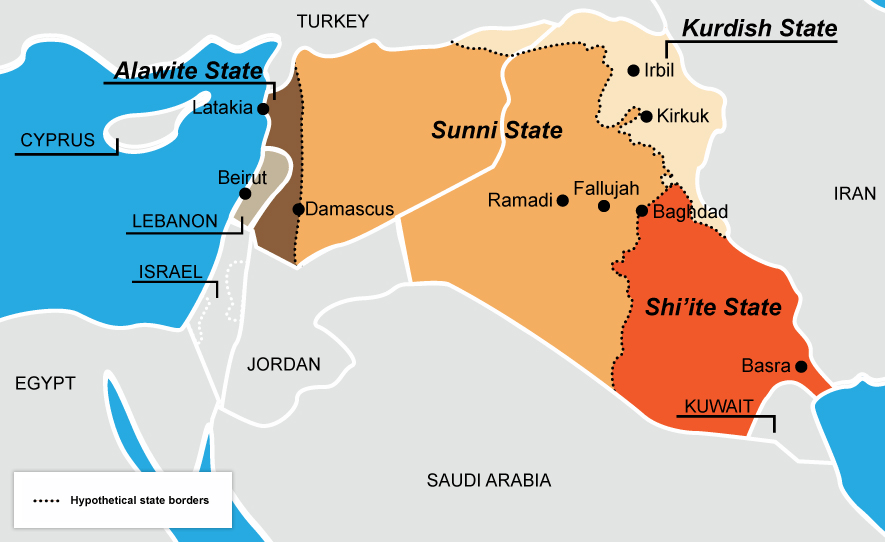
A very nice map of Syria and Iraq, which shows with dark brown the Muslim Alawite part at the Syrian coasts, with brown the Sunni Muslim parts of Syria and Iraq, with orange the Shiite Muslim part of Iraq, and with pink the Kurdish (Sunni) Muslim part of Syria and Iraq.

Map 1 Iraq and Syria


Syria and Iraq did not exist as states until the First World War 1914-1918. These pieces of land were parts of various empires until then, with the Ottoman Empire being the last one. During the First World War (1914-1918), the English and the French helped the local Arab populations to revolt against the Ottomans, because they wanted to prevent the Germans from reaching the Persian Gulf through the Austro-Hungarian Empire and the Ottoman Empire which were German allies.

Map 2 German, Austro-Hungarian and Ottoman Empires


When the English, the French and the Arabs did actually win the war and the Ottomans left the Middle East, it was time to decide how the new lands would be distributed to the Arab allies of the English and the French. The English and the French agreed that what became Iraq and Palestine (Jordan+Israel) would be under English influence, and what became Syria and Lebanon would be under French influence.

For the English the Iraqi oil was very important because the oil of Saudi Arabia was not discovered until 1938. The English could also export this oil through Palestine (Jordan+Israel) to the Mediterranean Sea. Moreover the corridor formed by Israel+Jordan+Iraq would offer the English an alternative route to India, which was their most important colony.

When the pro-Soviet socialist dictators rose to power in Syria and Iraq, they used a socialist model and diminished the role of religion in order to homogenize their populations. They also used Arab nationalism to achieve this same goal, since most of their citizens were Arabs, with the exception of the Kurds of course. What is strange is that in both Syria and Iraq the socialist dictators who managed to rise to power belonged to the minorities of these countries. In Syria the father of Bashar al Assad, Hafez Assad, was an Alawite, while Sunni Muslims were the majority of the Syrian population. In Iraq Sadam Hussein was a Sunni Muslim, while Shiite Muslims were the majority of the Iraqi population. Allawites are an offshoot of Shiite Islam.

In 2009 Bashar al Assad refused to allow the Qatar-Turkey pipeline to pass through Syria i.e. the Sunni Pipeline, while he agreed to let the Iran-Iraq-Syria pipeline to pass through Syira i.e. the Shiite Pipeline. The Iran-Syria pipeline would be constructed by Gazprom. As a result the Turks and the Arabs of the Persian Gulf supported the Sunni Muslims of Syria and Iraq, who revolted against the Alawites in Syria and against the Shiites in Iraq. That’s the reason ISIS is the first terrorist organization which wants to establish its own state i.e. the Sunni parts of Syria and Iraq. If that does indeed happen, an Alawite state will have to be created at the Mediterranean coasts of Syria, a Shiite state in Iraq, and a Kurdish state in Iraq and Syria.


Map 3 Sunni (red) VS Shiite (green) Pipelines